


Former Federal Reserve governor and Trump economic adviser Stephen Miran first laid out the need to tackle global imbalances with creative solutions in a November 2024 paper for Hudson Bay Capital.
In the piece, Miran floated several ideas as to how. The preferred remedy was clearly set out as the application of tariffs. But the paper also talked about the role a multilateral currency accord among the countries with the most-traded currencies could play in achieving similar outcomes — providing, that is, such parties could agree to coordinated action. For what it’s worth, Miran doubted either Europe or China would ever be willing to collaborate.
On the contrary, he stressed, it would likely take a series of punitive tariffs for either to entertain such notions. Nonetheless, since “accords are typically named after resorts where they are negotiated, like Bretton Woods and Plaza,” Miran noted, somewhat whimsically, that if such an agreement were to arise, one could refer to it as “the prospective ‘Mar-a-Lago Accord’”.
Three months later — once it was clear Miran would likely be joining the Trump advisory team — that same paper suddenly took on a life of its own. It began to circulate furiously among the financial press as an indicator of Trumpian administration thinking. The media and the economic community were predictably unimpressed. Almost immediately, everyone fixated on the Mar-a-Lago Accord component, while ignoring the larger framing. Most dismissed it as a ludicrous idea, deriding Miran for ever having floated it.
Ironically, the name ‘Mar-a-Lago Accord’ hadn’t even originated with Miran. He had taken inspiration from a note by former Credit Suisse wunderanalyst Zoltan Pozsar.
Given that the paper wasn’t advocating for a currency accord as its preferred option, it’s amazing, in hindsight, how much breathless commentary the idea inspired from the world’s top economic minds.
The Banque de France’s Agnes Benassy-Quere, for example, openly mischaracterised the paper as Miran proposing to solve the IMS problem not through structural changes but with a new Plaza-style agreement and century bonds. She also pointedly questioned Miran’s opening assertion American industry should be put on fairer ground vis-à-vis the rest of the world.
FT Alphaville’s Robin Wigglesworth said it amounted to “essentially a glorified protection racket scheme with some lipstick.”
Mark Sobel at OMFIF said “Mar-a-Lago Accord proponents may have woefully exaggerated perceptions about US leverage over China.”
Steven Kamin, previously head of international finance at the Federal Reserve, joined the chorus too: “a Mar-a-Lago Accord would be pointless, ineffectual, destabilising, and only lead to the erosion of the dollar’s pre-eminent role in the global financial system.”
The commenters on Gillian Tett’s March column, were even more derisory:
“It’s something of a mystery why Miran and his ilk are so enamored of the Plaza Agreement.”
And “Stephen Miran is the ‘economics version’ of Jordan Peterson, an idi*t savant for MAGA idi*ts.”
But with German Chancellor Friedrich Merz declaring last week that China’s flooding of markets by “subsidising overcapacities” with a “currency that isn’t convertible freely … is not acceptable”, it’s hard not to wonder who’s laughing now?
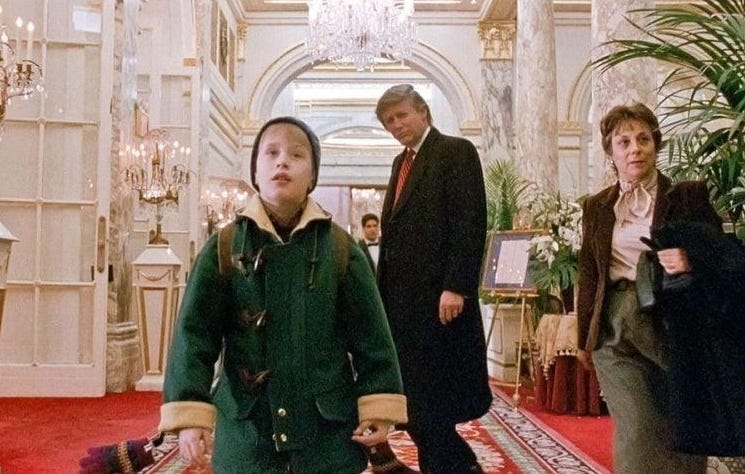
This is all the more the case now that Merz has explicitly floated the idea of initiating a new type of Plaza framework (which let’s remember, for irony’s sake, Trump owned, between 1988-1995) to deal with the impact of Chinese imbalances on European trade.

